
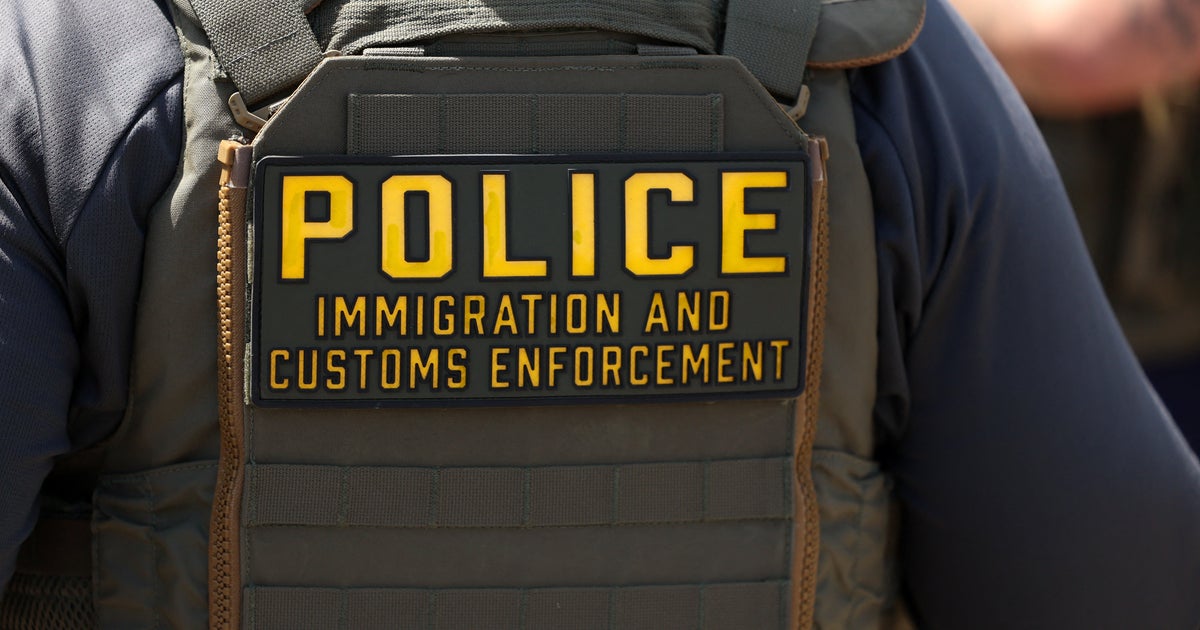
U.S. Immigration and Customs Enforcement has made plans to ramp up operations to arrest and deport Haitian migrants, as hundreds of thousands of Haitians brace for the termination of their legal status, according to two agency sources and federal documents obtained by CBS News.
The plans include arresting migrants in Ohio — where large Haitian communities in cities like Springfield have been targeted by President Trump and conservative politicians and commentators — and quickly putting them on deportation flights to crisis-stricken Haiti, the internal documents indicate. During the 2024 presidential campaign, Mr. Trump amplified baseless claims that Haitians in Springfield were eating cats and dogs.
The internal plans for a potential arrest and deportation blitz have been made as more than 300,000 Haitians prepare to lose deportation protections and work permits under the Temporary Protected Status, or TPS, program. The Supreme Court last month sided with the Trump administration in its efforts to end the TPS programs for Haitians and Syrians. That ruling’s binding mandate is set to be issued to lower courts on Monday.
Since that ruling, fear and uncertainty have swept throughout Haitian communities across the U.S. Immigrants whose TPS lapses immediately lose their ability to work in the country legally, and become eligible to be arrested and processed for deportation by ICE, unless they have another status. Those without removal orders are generally entitled to appear before an immigration judge before any deportation can take place.
The operations targeting Haitian migrants could start as early as this week, the documents suggest, but more details about the scale of the plans were not immediately clear. The ICE sources who described the preparations requested anonymity to describe internal plans that have not been publicly disclosed and are fluid.
Any uptick in deportations to Haiti would almost certainly raise political and humanitarian challenges, given the dire situation in the Caribbean nation, the poorest country in the Western Hemisphere. Significant portions of Haiti are controlled by criminal gangs, and the U.S. has generally limited deportations to Cap-Haïtien, in the country’s north, due to the instability and insecurity in the capital of Port-au-Prince. The State Department urges Americans not to visit Haiti under any circumstances, citing the rampant violence there.
In a statement to CBS News, the Department of Homeland Security, which oversees ICE, said it “does not discuss ongoing or future operations.” It argued TPS has been used as a “defacto amnesty program” and suggested that those set to lose their status should self-deport.
“What we would say now is it’s closing time which means you don’t have to go home, but you can’t stay here,” DHS added in its statement. “The good news is it’s not too late to get a $2,600 check and a free flight home.”
Created in 1990 by Congress, TPS allows federal immigration officials to grant temporary work permits and a reprieve from deportation to immigrants from countries facing an armed conflict, environmental disaster or another emergency.
The Trump administration has sought to end most TPS programs, arguing that they incentivize illegal immigration and that they have been unnecessarily extended for too long by Democratic administrations, despite the temporary nature of the policy. It has terminated or moved to end TPS programs for hundreds of thousands of immigrants from Afghanistan, Cameroon, Honduras, Nicaragua, Venezuela and other countries.
A version of Haiti’s TPS program has been around since 2010, following the devastating earthquake there that year. But most of those currently enrolled in the program came to the U.S. under the Biden administration, either illegally along the southern border or through programs, since terminated by Mr. Trump’s White House, that allowed Haitians and other immigrants to enter the country legally.
The Trump administration moved to end the Haiti TPS policy last year, but the decision has been held up in court ever since.
In a ruling in February, U.S. District Court Judge Ana Reyes found that the move to end the program was “in part” rooted in “racial animus,” citing disparaging remarks that then DHS Secretary Kristi Noem and Mr. Trump made about Haiti and immigrants. But in its decision last month, the Supreme Court’s majority said federal law barred judges from reviewing TPS determinations and found Mr. Trump’s comments not to be “overtly racial.”
The Trump administration scaled back large-scale immigration roundups after two U.S. citizens, Renee Good and Alex Pretti, were killed by federal agents during a massive deployment to the Minneapolis area in January. But ICE operations have ramped up this summer, amid pressure for the agency to record 2,000 daily arrests.
Last month, the number of detainees booked into ICE custody hit a monthly record high for the second Trump administration. During the recent surge in ICE operations, two immigrants from Mexico and Colombia were killed by agents during traffic stops in Texas and Maine.