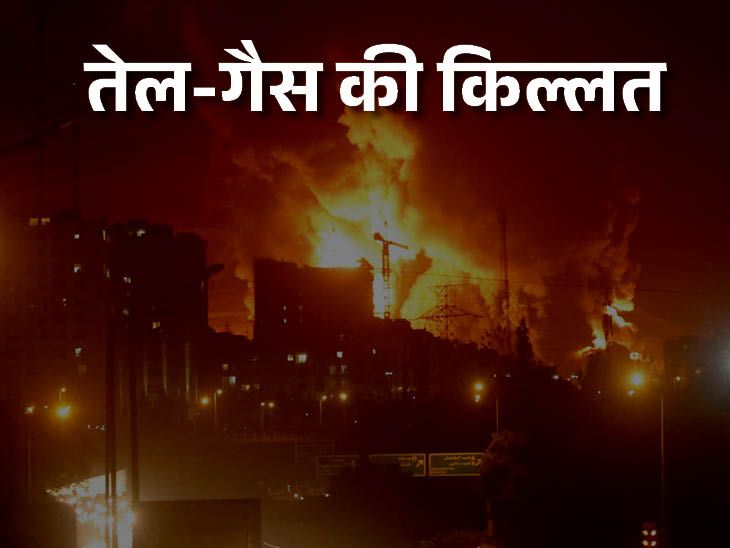
The effect of the 11-day-long war between America, Israel and Iran is now visible in many countries of Asia. 9 Asian countries including India, Pakistan and Bangladesh have started taking emergency steps to deal with the energy crisis. Pakistan has decided to close schools for two weeks and employees in offices have been instructed to work from home. Bangladesh has ordered closure of all universities and postponed Eid holidays. Countries like South Korea, Japan and Indonesia are also taking steps like giving subsidies to keep the prices of petrol and diesel stable. China has also banned the export of fuel for the time being. The Strait of Hormuz is closed due to war, due to which the oil supply has come to a halt. The Strait of Hormuz is a very important sea route in the world. Every year about 20% of the world’s oil supply passes through this route. Thailand- Order to use stairs instead of lift. To save energy, the government in Thailand has instructed government employees to work from home and use stairs instead of lifts in offices. According to the government spokesperson, officers who have to directly serve the public have been exempted from this rule. Thailand’s Prime Minister Anutin Charnvirakul has asked government employees to implement necessary measures to save energy. The government has temporarily halted foreign travel. To save energy, instructions have been given to keep the temperature of the air conditioner between 26 to 27 degrees Celsius. Officers have been advised to wear short sleeve shirts instead of formal clothes like suit and tie. According to the Energy Minister, the country currently has about 95 days of energy reserves left. The government is trying to buy additional LNG from the US, Australia and South Africa. The government has warned that if the crisis worsens, then strict measures can be taken like dimming the lights of advertising boards of shops and business establishments and closing petrol pumps by 10 pm. China increased the purchase of crude oil, stopped fuel export. In view of the possible energy crisis, China has started strengthening its strategic reserves by increasing the purchase of crude oil. According to reports, China has purchased excess crude oil in the early months of the year and is keeping it in strategic and commercial reserves. Along with this, the government has instructed the refineries not to sign new fuel export contracts and to stop some scheduled shipments. The objective of the government is to maintain adequate availability of petrol, diesel and other fuels in the domestic market. Experts say that if the conflict in the Middle East prolongs and global supplies are further affected, China can use its strategic oil reserves. Pakistan- Ban on ministers’ salaries and foreign tours. Pakistan Prime Minister Shahbaz Sharif on Monday announced a plan to cut expenses in view of rising oil prices. Under this, government offices will open only four days a week and half the employees will work from home. Schools will remain closed for two weeks from the end of this week. According to Pakistani news channel Geo News, foreign tours of ministers and advisors have been stopped. Ministers will not take salary for two months and there will be a 25% cut in the salary of MPs. At the same time, government vehicles in Pakistan will now get 50% less fuel for two months. 60% government vehicles will not run. All government departments will cut their expenditure by 20%. Sharif said that due to the US-Israel-Iran conflict, the price of crude oil has increased from $60 to more than $100 per barrel. For this reason these decisions have been taken. Bangladesh – All universities closed Bangladesh has ordered closure of all universities from Monday to reduce electricity and fuel consumption and has declared Eid-ul-Fitr holidays earlier. According to the Energy Ministry, in recent days due to fear of fuel shortage, panic increased among people and hoarding had started at many places. After this the government imposed a limit on daily fuel sales. Gas shortage has also affected industries. Many fertilizer factories in the country have had to stop production due to reduced gas supply. The government says that the situation is being continuously monitored and if necessary, more stringent steps can be taken to save energy. Vietnam- Advice to employees to work from home. In Vietnam, the government has appealed to companies to provide work from home facility to employees to save energy. According to the Ministry of Industry and Trade of Vietnam, this will reduce fuel consumption in commuting to office and will help in energy saving. Along with this, the government has also removed the tariffs imposed on some fuel imports to maintain the availability of fuel in the domestic market. The government says that amid increasing uncertainty in the global energy market, it is necessary to maintain fuel supply and reduce consumption. For this reason, Vietnam is taking several steps simultaneously to increase energy saving and fuel availability. South Korea- Preparation to impose a cap on fuel prices. After increasing pressure on global oil supply, South Korea has started taking steps to deal with the energy crisis. The government is preparing to impose a price cap for the first time in almost three decades to control domestic fuel prices. South Korean President Lee Jae-myung has said that this step is being taken to stop the rise in oil prices and to provide relief to common consumers. The government has also said that it is exploring alternative energy sources whose supply does not pass through the Strait of Hormuz. South Korea is looking for new sources to secure its energy supply and is taking measures to stabilize the domestic market. Japan- In preparation to withdraw crude oil from the national oil reserves, Japan has instructed the national oil storage centers to be ready to release crude oil if needed to deal with the energy crisis. According to officials of Japan Organization for Metals and Energy Security (JOGMEC), this order has been given by the Natural Resources and Energy Agency. The government’s objective is to ensure that there is no shortage of oil in the domestic market if there is a disruption in global supply. India- Commercial gas cylinder supply stopped in many states. India has directed oil refineries to increase LPG production for domestic use. There is a shortage of LPG in the country. Many states including Delhi, Madhya Pradesh, Maharashtra, Uttar Pradesh and Rajasthan have banned the supply of commercial gas. Due to stoppage of gas supply, restaurants and hotels have become closed in many cities. In such a situation, government sources say that oil companies will talk to different restaurant associations, so that the problems of LPG supply can be understood. Indonesia- Fuel subsidy increased, consideration of use of biodiesel. Indonesia has decided to increase fuel subsidy in the national budget to control the prices of fuel and electricity. Its objective is to reduce the impact of increase in global oil prices on common consumers. Apart from this, the government has started reconsidering the B50 biodiesel program. Under this scheme, it is proposed to mix 50% palm oil based biodiesel in diesel, so that dependence on imported oil can be reduced. The government believes that by promoting alternative energy sources, the country’s energy security can be strengthened and the impact of the global oil crisis can be limited.
Source link
Iran war- Oil crisis in 9 Asian countries: Universities closed in Bangladesh, ban on use of lifts in Thailand; Salary of ministers and foreign travel stopped in Pakistan
 By ayoobkk2022