Beijing6 hours ago
- copy link
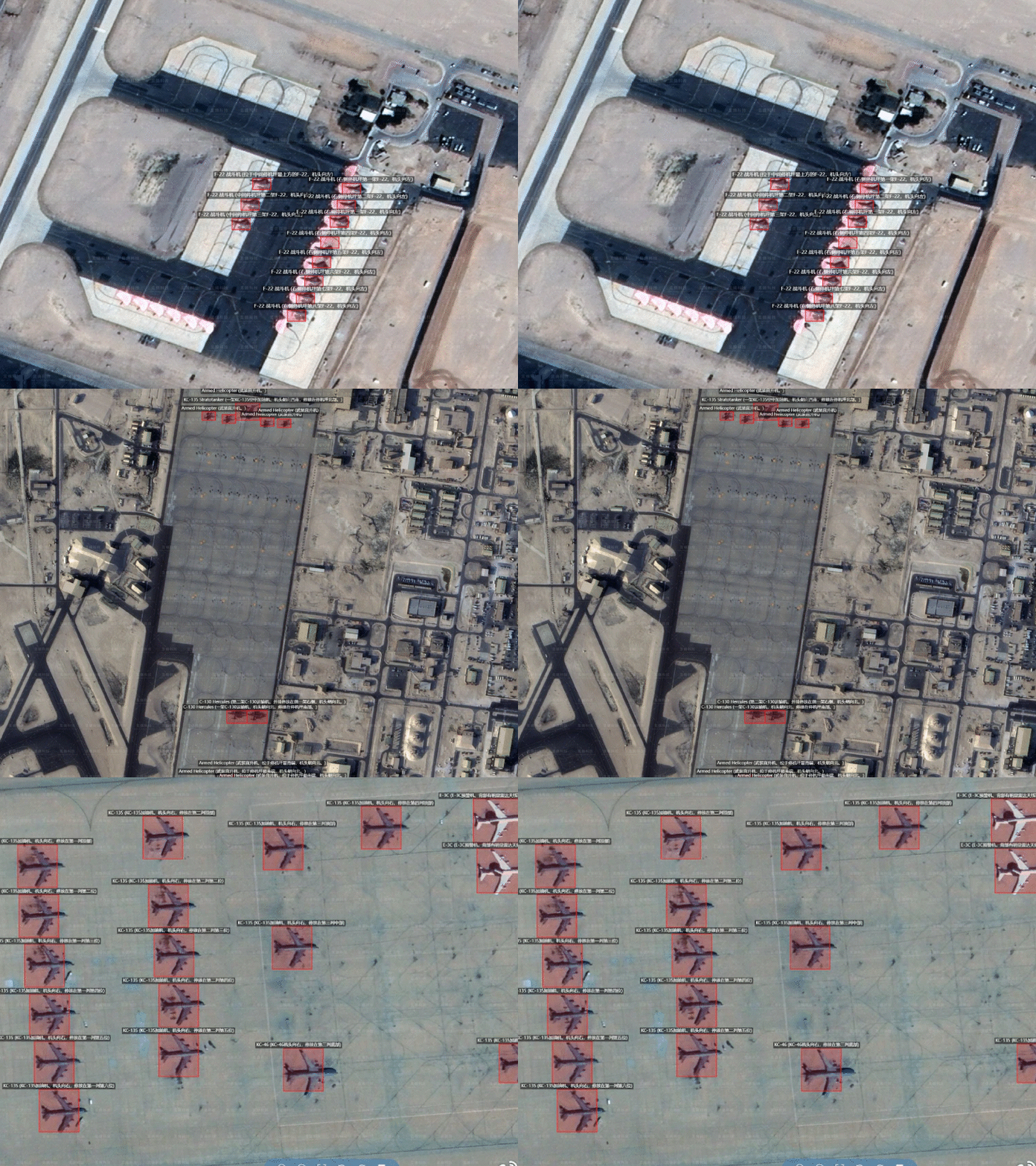
Even before the first missile was fired at Iran on February 28, there were indications on Chinese social media that America was preparing for a major attack. Satellite photos related to American military preparations started spreading rapidly on the Internet.
In these pictures, fighter planes standing on the runway, transport planes landing on a desert airfield and fighter jets deployed on the deck of an aircraft carrier in the Mediterranean Sea were visible. The special thing about these photographs was that they contained an unusually large amount of information, and this information was written not in English but in Mandarin (Chinese language).
The photographs included names of individual aircraft, clearly marked missile defense systems and showed troop deployments with precise locations.
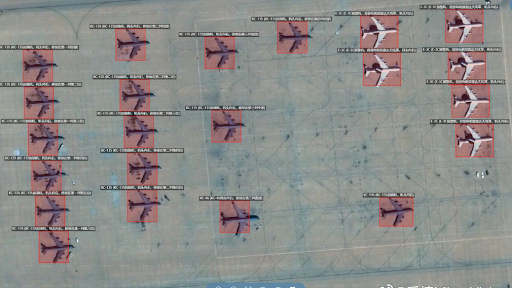
24 February: Satellite images showed military aircraft at Prince Sultan Air Force Base.
Chinese AI company had shared pictures
These satellite photos were shared online by a Chinese artificial intelligence company. In one photo, Lockheed Martin’s F-22 stealth fighter was seen parked at Israel’s Ovda Air Base. The second photo showed the increased deployment of aircraft and support systems at Saudi Arabia’s Prince Sultan Air Base.
Apart from this, American military bases in Qatar, Jordan and Bahrain were also marked on the map. All these photos were shared by Shanghai-based geospatial intelligence company Mizar Vision, which has less than 200 employees.
24 February: Satellite images showed military aircraft parked on the runway of Prince Sultan Air Force Base.
All photos released by satellite company Mizar Vision
On February 28, America and Israel together launched air strikes on Iran under “Operation Epic Fury”. In response, Tehran launched missile and drone attacks.
But amidst this struggle, something else was going on parallelly. Satellite photos were continuously appearing on the internet, showing American aircraft, missile defense systems and naval activities. All these photos were being shared by Shanghai-based geospatial intelligence company Mizar Vision.
It is said that the first set of big pictures were revealed around February 20.
Mizar Vision released a collection of high-resolution satellite images showing the deployment of US aircraft at Ovda Air Base in southern Israel, the presence of fighter jets in several Middle East countries including Saudi Arabia and Qatar, naval activities in the Arabian Sea and the movement of aircraft carriers.
Different information was also added to all these photographs with the help of Artificial Intelligence. The types of aircraft were described, support aircraft were identified and missile defense systems were also identified.
By March 1, this data had increased further. Mizar Vision also released new satellite images of military bases in Jordan, Kuwait, Bahrain and the United Arab Emirates. Different types of aircraft, arrangement of air defense system and deployment of soldiers were also shown in these pictures.
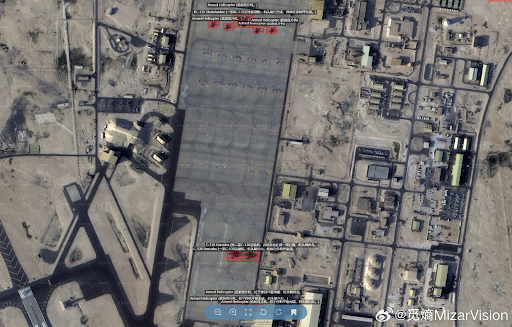
February 26: Satellite images showed a KC-135, two C-130 aircraft and about seven attack helicopters parked on the runway of Al-Udeid Air Base.
Photos shared on X with exact location
These satellite images were posted on social media platform X and Chinese platform Weibo along with the exact location. Many of these posts were also shared by accounts associated with Chinese state media and analysts associated with the People’s Liberation Army (PLA).
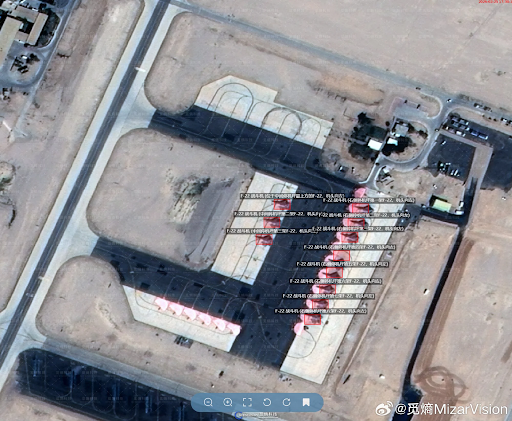
Many important military platforms of America were seen in these pictures. Satellite images showed F-22 stealth fighters parked at Israel’s Ovda Air Base, just as the war was about to begin.
According to the photos, seven F-22 aircraft were parked near the runway and four more F-22s were visible on the runway. About 24 hours later, “Operation Epic Fury” began.
Other photos also showed military activities at Saudi Arabia’s Prince Sultan Air Base. Seven Boeing E-3 Airborne Warning and Control System aircraft and two Bombardier E-11 communication aircraft were said to be deployed here.
Apart from this, satellite pictures of Qatar’s Al-Udeid Air Base were also revealed. Later this air base became the target of Iran’s missile and drone attacks.
However, these pictures were not limited to the airfield only. Naval activities at sea were also tracked.
Monitoring aircraft carriers from space
Mizar Vision also released satellite images that showed US Navy activities in the sea. The US Navy’s newest aircraft carrier USS Gerald R Ford was also seen in these photos. The ship appeared after leaving the Suda Bay naval base on the Greek island of Crete.
The photos also showed Boeing F/A-18E/F Super Hornet fighter jets and Northrop Grumman E-2D early warning aircraft on the deck of the aircraft carrier.
Another satellite photo showed the USS Abraham Lincoln aircraft carrier rendezvous with a supply ship in the Arabian Sea near Oman.
The company also combined these satellite images with open-source flight tracking data.
Using aircraft tracking tools, analysts tracked a US Navy Boeing P-8A maritime surveillance aircraft taking off from Isa Air Base in Bahrain. The aircraft was headed towards the area of the Arabian Sea where the Abraham Lincoln Carrier Group was believed to be present.
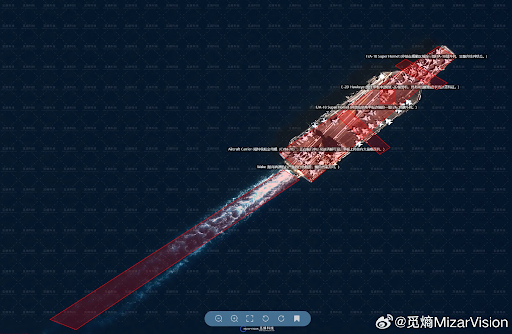
Satellite images showed the USS Ford aircraft carrier departing from the Suda Bay naval base.
Mizar Vision does data analysis
Unlike US companies like Vanator (formerly Maxar Intelligence) or Planet Labs, which run their own satellite networks, Mizar Vision primarily deals with analyzing and processing the data.
According to analysts, its role is that of a kind of “information aggregator”.
The company integrates a variety of publicly available data, such as commercial satellite images, aircraft tracking signals via ADS-B, and ship tracking data via AIS.
After this, all this data is processed with the help of Artificial Intelligence model. These models automatically identify military equipment and activities.
The data thus generated is similar to geospatial intelligence, which is typically generated by national intelligence agencies.
For this reason, this company is also called the “Bloomberg of Intelligence”, because it combines data from different sources on a single platform and analyzes it.
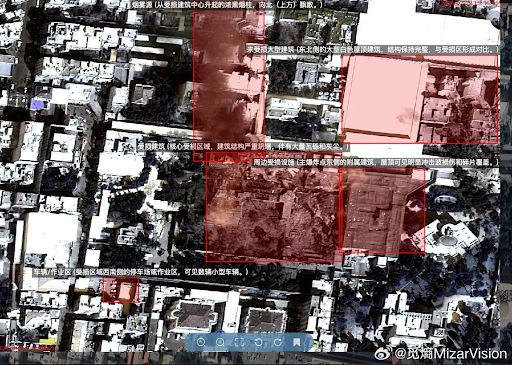
Satellite images show damage to many buildings in Iran’s capital Tehran following US and Israeli attacks.
Where does satellite data come from
The satellite images used by Mizar Vision may have come from two possible sources.
The first source is believed to be China’s Jilin-1 satellite network, which is operated by Chang Guang Satellite Technology.
The Jilin-1 network includes more than 100 Earth observation satellites. Many of these satellites are capable of taking sub-meter resolution images. In such clear pictures, the planes parked on the runway and different missile defense systems can be easily identified.
Another possible source could be Western commercial satellite companies, such as Vantour, Planet Labs and Airbus Defense and Space. These companies operate satellite networks around the world and sell satellite images commercially to customers.
Did Iran use this data?
There is no definitive evidence that Iran used these satellite images to direct its attacks. However, many of the military bases previously featured in Mizar Vision’s posts later became targets of Iranian missile and drone attacks.
These included Qatar’s Al-Udeid Air Base. Apart from this, Iran also targeted military bases in Jordan, among which the main one was Salti Air Base. Here the AN/TPY-2 radar system worth about $300 million, used for the American THAAD missile defense system, was destroyed.
Later satellite images also confirmed the destruction of this radar system. This radar was considered very important for missile defense in the Gulf region.
After the destruction of the radar, the responsibility of intercepting the missiles fell largely on the Patriot missile batteries. But the PAC-3 interceptors used in these are already available in limited numbers.