Tehran/Tel Aviv/Washington DC5 minutes ago
- copy link
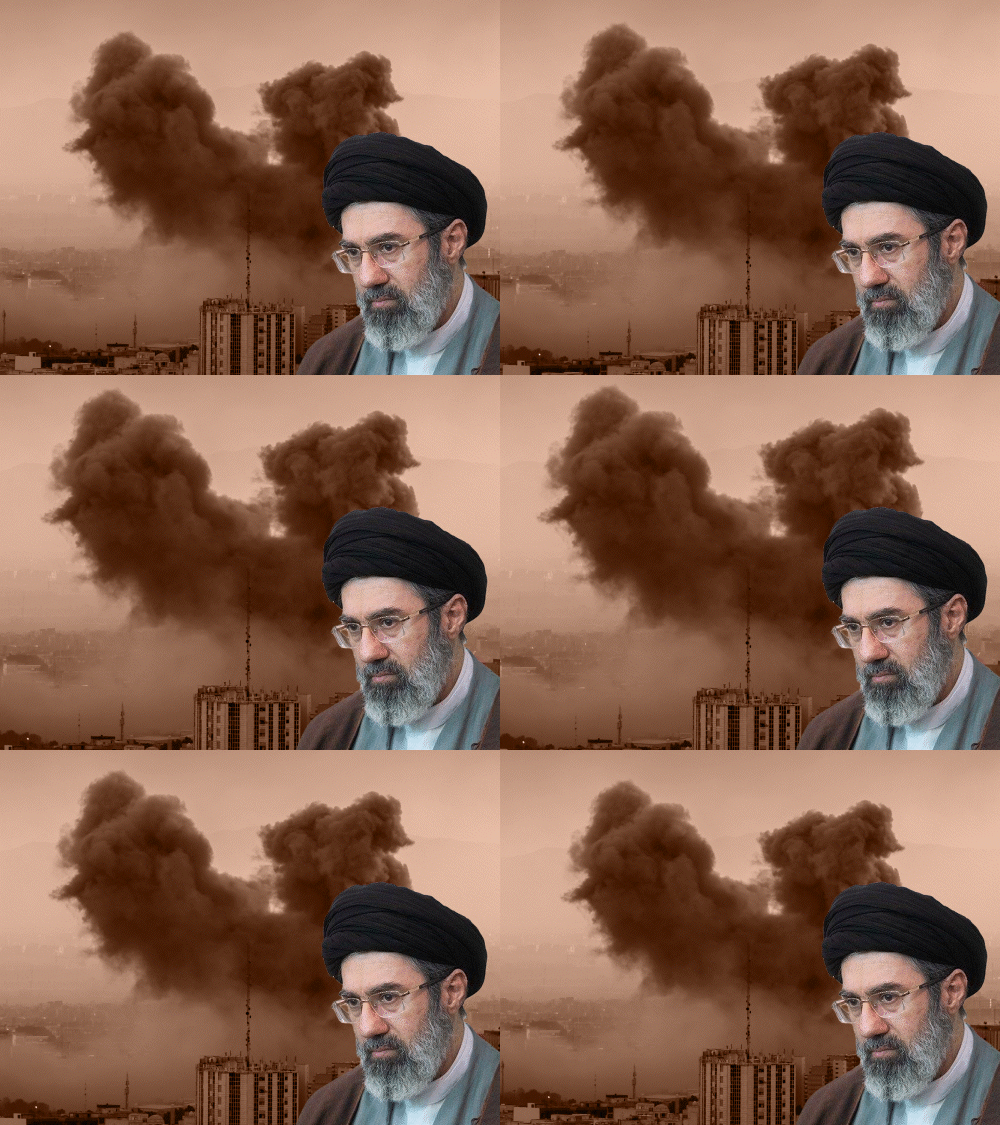
Iran is currently facing the biggest threat ever. Despite this, he is engaged in prolonging the ongoing conflict with America and Israel. Iran has suffered huge losses in the last few weeks. Many of its big leaders and important people in the military command structure have been killed. This has dealt a serious blow to his leadership system.
The situation inside Iran is also not good. People are facing shortage of essential goods, damage to infrastructure and tight security environment. Despite this, the remaining leadership of Iran is continuously giving aggressive statements.
They are trying to show that Iran can withstand a long-term conflict. They do not care about more leaders being killed and are ready to prolong this war, no matter what the consequences for the entire region and the world.
Experts say that Iran’s aim is not to win this war. Its real objective is to save its existence, to scare its enemies and to create a situation in which it can decide the terms after the war. He is escalating the conflict so that it becomes too costly for the other countries to continue and they are forced to compromise.

Oil tankers and cargo ships in the Strait of Hormuz, seen from Mina Al Fajer, UAE, this month.
Iran wants compensation to end the war
US President Trump has asked Iran to surrender. But on the contrary, Iran is showing itself in a strong position. He is saying that he has been successful in surviving this conflict and is now putting forth his terms for peace.
Iran wants a new system to be created in the region after the war ends. He is also demanding compensation for war damages and wants a change in the long-standing relations between the Gulf countries and America.
Iran’s Parliament Speaker Mohammad Bagher Ghalibaf said a ceasefire was possible only when it was certain that the enemy would not attack again. He says that if the ceasefire gives the enemy an opportunity to rebuild its forces, such as repairing radar or strengthening missile systems, then such a ceasefire is useless.
He also said that Iran will continue fighting until the enemy regrets its attack and the right political and security conditions are created in the world and the region.
Iranian Foreign Minister said – new rules should be made for the Strait of Hormuz
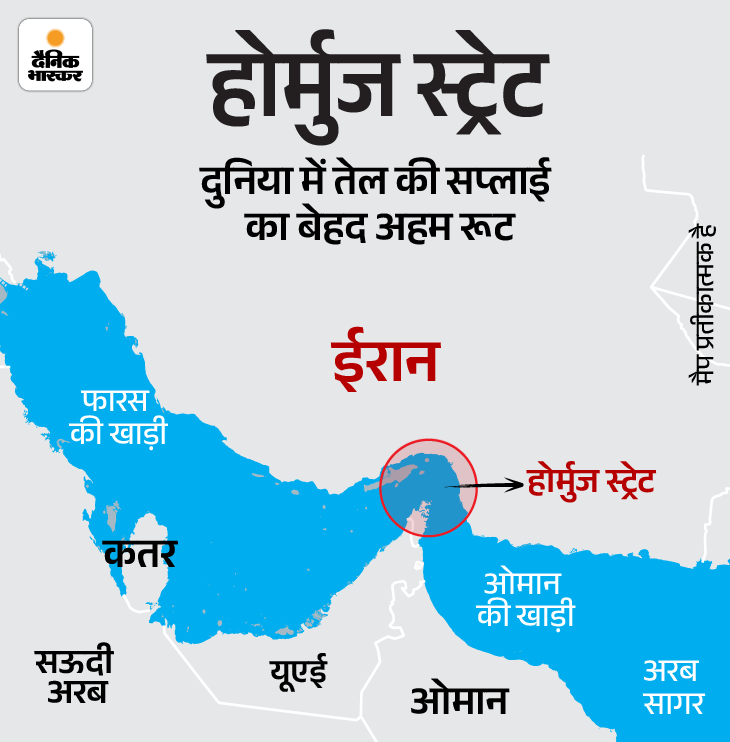
Iran’s Foreign Minister Abbas Araghchi said that after the war, new rules should be made for the Strait of Hormuz, taking into account Iran’s interests. He said that safe movement of ships should happen only under certain conditions.
Experts believe that in future, Iran may demand the release of its money stuck abroad or may also collect taxes from the countries using this sea route. Ghalibaf clearly said that the situation in Hormuz will no longer be the same as before.
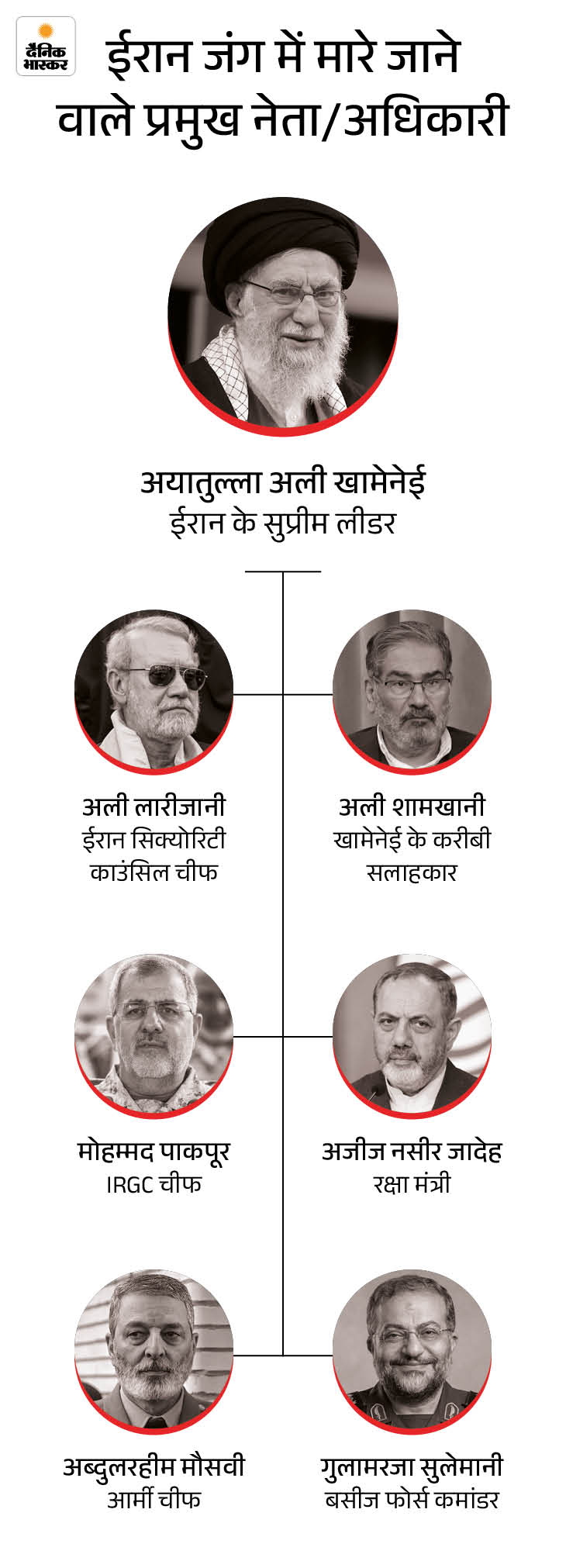
Now the pressure on the question ‘what will happen after the war’ is also increasing. Negotiations continued between Western countries and Iran for two decades, but last month America and Israel attacked Iran. Supreme Leader Ayatollah Ali Khamenei was killed in this attack and the country’s military and administrative system suffered huge damage.
In response, Iran launched rapid and continuous attacks. It fired hundreds of missiles and drones at America’s allies across the region. This worsened its relations with the Gulf countries and also affected the global energy market. Especially due to attacks on ships in the Strait of Hormuz.
Iran wants to turn pressure to its advantage
Sina Toosi, an expert on Middle East issues, told CNN that Iran wants to turn the pressure it is under now to its advantage later. It wants a situation where there is no attempt to isolate or eliminate it, but rather it is considered an essential part of the stability of the region.
US Defense Secretary Pete Hegseth says Iran is losing the war. Trump also said that Iran’s military is almost destroyed and its leaders have been eliminated at almost every level. He also said that Iran should never again threaten America, its allies or the world.
But a few hours later, Iran attacked for the 61st time, in which a couple in Israel died.
Expert said – Iran is not winning, it does not even need to win
Professor Nargis Bajogli of Johns Hopkins University says that Iran is not winning in terms of a conventional war, but it does not need to win in the same way. His strategy is different.
Iran is adopting a different strategy, in which it wants to make the war so costly that the opposite country cannot continue it.
He says that America and Gulf countries cannot tolerate interruption in oil trade and rising prices for a long time. At some point they will say enough is enough and this is the pressure Iran wants to create.
Iran had already made preparations for such a situation. The Revolutionary Guard (IRGC) had made such plans that in case of major attacks, small units could operate from different places.
Death of old officers, new officers are taking decisions
Iran says it is targeting only US interests, but its attacks have also hit hotels, airports, high-rise buildings and energy facilities in Oman, the UAE, Bahrain, Kuwait, Qatar, Iraq and Saudi Arabia.
It is clear that Iran wants to create a new balance of power in the region and create fear to prevent future attacks against it.
Experts say that now a new generation of commanders has emerged in the IRGC, who have emerged after the earlier leaders were killed. These new leaders have seen Iran’s power being used in Iraq and Syria and they are taking decisions on that basis.
Iran’s strategy now is to link its stability to the stability of the entire region. Meaning if Iran becomes unstable, the entire Gulf region may also become unstable.
Attacks on ships and fluctuations in the oil market in recent days have shown that Iran has strong means of exerting pressure. The spokesperson of Iran’s army claimed that the American leadership system in the Middle East is now over.
‘Gulf countries can come closer to Israel’
However, it is not clear whether this strategy of Iran will be successful or not. So far most Gulf countries have not been directly involved in this war, although they have been attacked.
In such a situation, many countries have made it clear that they will strengthen their relations with America and Israel.
A senior UAE official told CNN that Iran is considered the biggest threat among the Gulf countries and this perception will not change for decades to come.
He also said that UAE could join any coalition to open Hormuz. He believes that Iran’s strategy is based on misunderstanding and that after the war, the Gulf countries may come closer to Israel.
A UAE minister said that despite the attack on her country, there will be no impact on her relations with America and Israel. He said that their relationship with America is long standing and it is based on trust, which will not break even in times of crisis.