London3 minutes ago
- copy link
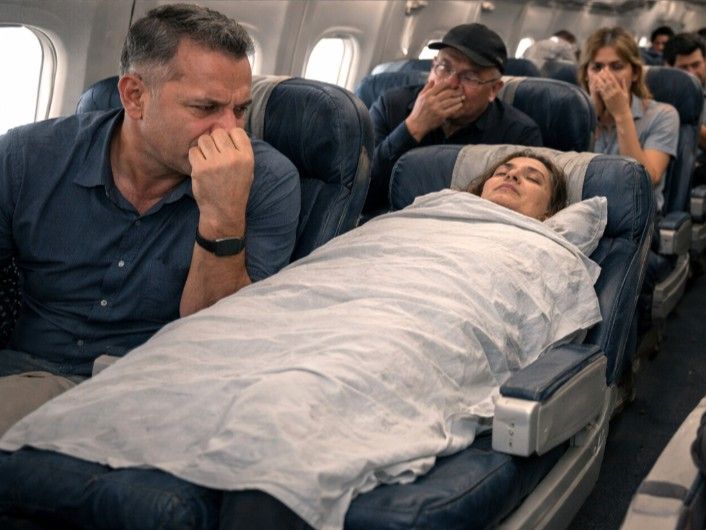
AI generates symbolic image.
A female passenger on a British Airways flight died on Sunday, about an hour after takeoff. After this, his body remained in the plane for 13 hours.
The body was placed in the rear of the plane, where the floor was heated. Due to this, the smell gradually started spreading, causing a lot of trouble to the passengers sitting behind.
This incident happened on a flight from Hong Kong to London. The woman was around 60 years old.
The pilot decided to continue to London rather than abort the flight or turn back, as such situations are not normally considered an emergency under regulations.
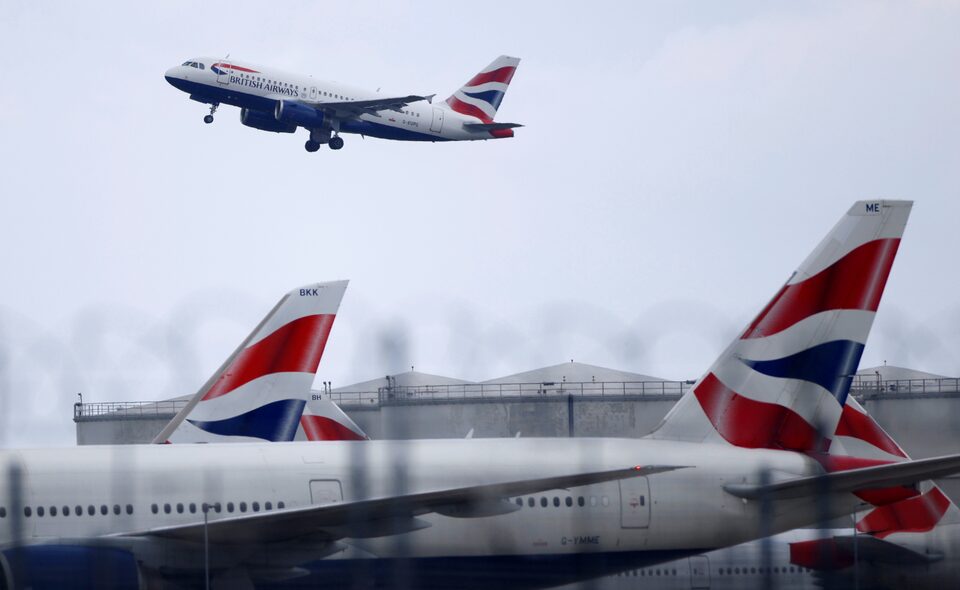
The British Airways flight in which the woman died was going from Hong Kong to London.
The body was wrapped in a blanket and kept in the galley.
The crew members first thought of keeping the body in the toilet, but later wrapped it in a blanket and kept it in the galley. The galley is the area of the aircraft where the flight staff (crew) prepares food and drinks and stores luggage.
It is from here that food, water, tea and coffee are provided to the passengers. Usually this happens in the front or rear part of the plane. On reaching London, the police came to the plane and investigated and the passengers were kept sitting on their seats for about 45 minutes.
The airline British Airways said all regulations were followed correctly and their thoughts are with the woman’s family.

The woman’s body was kept in the galley of the plane. The galley is the area where the flight staff (crew) prepares food and drinks and stores luggage.
What happens if someone dies on a plane?
If a passenger dies during air travel, then airlines work according to a fixed rule. These rules are based on the guidelines of the International Air Transport Association (IATA).
First of all the flight staff tries to save the passenger. CPR is given and if there is a doctor on the plane, his help is sought. After this the information is given to the pilot.
The pilot then decides whether to abort or proceed with the flight. Usually flights are taken to their destination as not every case is considered an emergency.
If the passenger dies, the body is covered with a blanket or body bag. It is then kept in an empty seat or in the back part (galley) of the plane. If the seat is not vacant, the dead body can be kept on the same seat.
The crew takes care that the other passengers face minimum inconvenience. The airport is informed before landing, so that the medical team and police are ready. After landing, necessary checks and procedures are completed.
Airlines do not provide compensation in every case
If a passenger dies during air travel, the airline does not pay compensation in every case. Compensation is given only when the airline’s fault or negligence is proven.
According to the rules, it is the responsibility of the airline to provide immediate assistance to the passenger. This includes providing medical aid, performing CPR and seeking doctor’s help if needed. If the airline does all this correctly, it is not considered guilty.
According to IATA, if a passenger dies due to natural causes such as heart attack, then the airline is not liable to pay compensation.
But if it is proved that the airline did not provide timely help or did not follow the rules, then it may be held responsible and may have to pay compensation.
When is it considered an emergency on a plane?
Not every problem during air travel is considered an emergency. According to aviation rules, the situation is declared an emergency only when the life of the aircraft, passengers or crew is in danger.
According to aviation authorities such as the Federal Aviation Administration (FAA), in such a situation, the pilot gives information about the emergency by calling “may med” or “pain pain” and takes further decisions.
The most serious situation is considered to be when the plane catches fire or is filled with smoke. In such cases, landing is done immediately at the nearest airport. Apart from this, engine failure, loss of cabin pressure or lack of fuel are also considered emergencies, in which quick landing is necessary.
In case of serious medical cases, such as heart attack or difficulty in breathing, flights can also be diverted so that the passenger can get quick treatment. In case of bad weather or security threat (such as a bomb threat), the pilot can land the flight at the nearest airport.
However, not every medical problem or incident has a quick landing. In cases such as mild illness or death of a passenger, the flight is often continued to its destination.
—————-
Read this news also…
Air India Express flight’s wheel falls out during landing: Nose gear broken; Hard landing in Thailand, 133 people were on board

An Air India Express flight in Thailand met with an accident during landing on Wednesday afternoon. As the plane landed on the runway, its nose gear broke and the front wheel separated. The flight was going from Hyderabad to Phuket. Read the full news…