washington41 minutes ago
- copy link
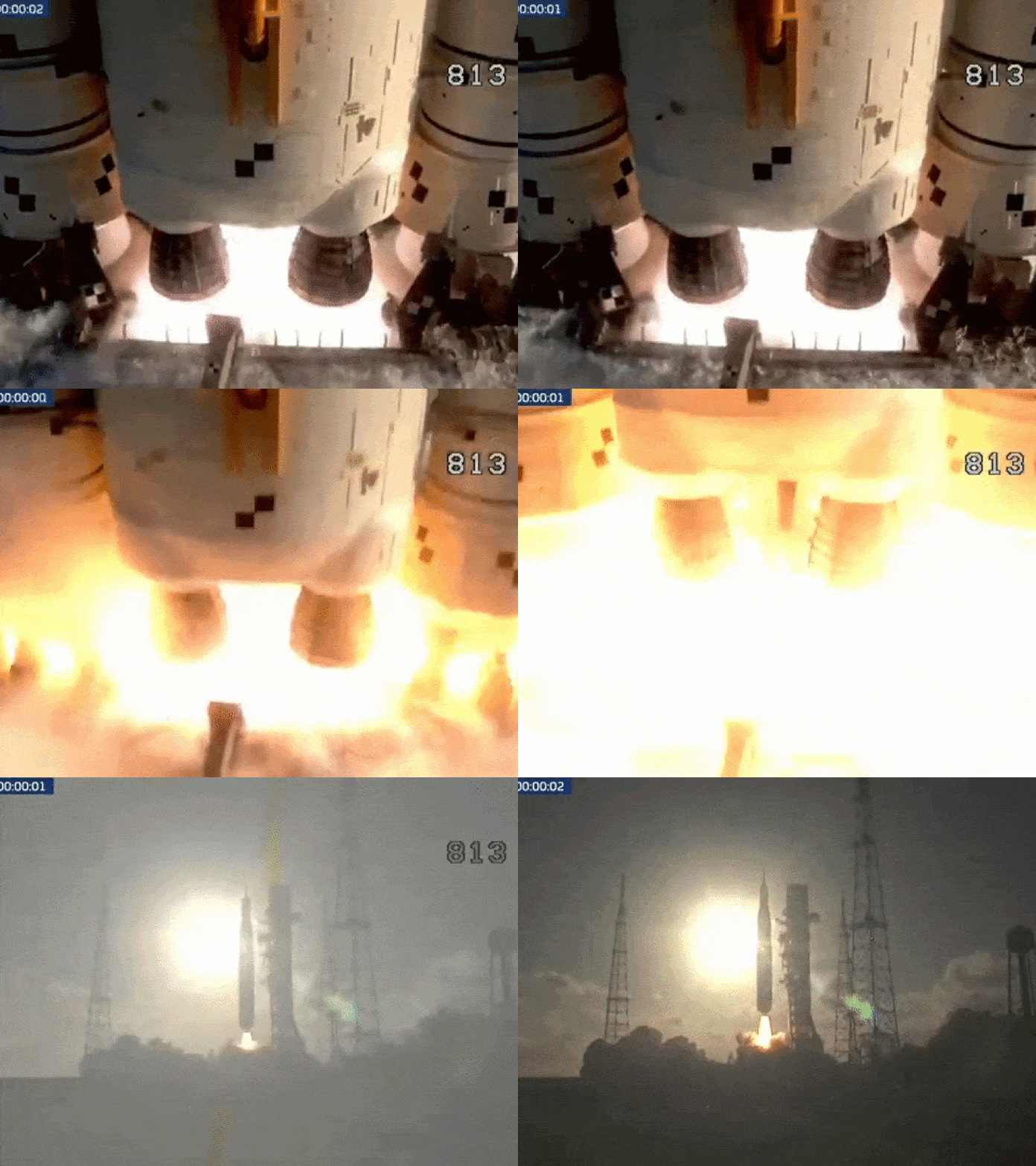
American space agency NASA launched the ‘Artemis-2’ mission today on April 2. At 4:05 am, the ‘Space Launch System’ (SLS) took off towards the Moon carrying 4 astronauts aboard the Orion spacecraft. This launch took place from Kennedy Space Center in Florida.
This is the first time after ‘Apollo-17’ in 1972 that a human will cross the Low Earth Orbit (LEO) and reach close to the Moon. In this mission, all four passengers will revolve around the moon and then return back to Earth. This mission is of 10 days.
5 pictures of mission launch…
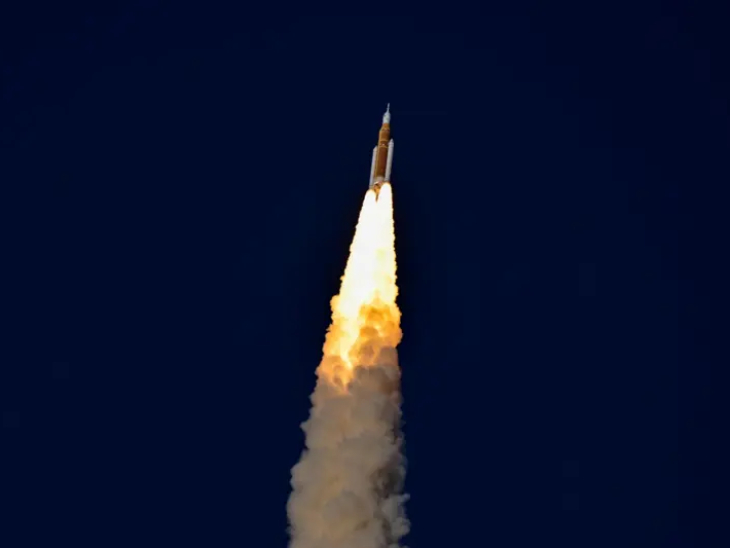
The launch of the Artemis-2 mission was successful after some last-minute improvements in the battery and safety system.
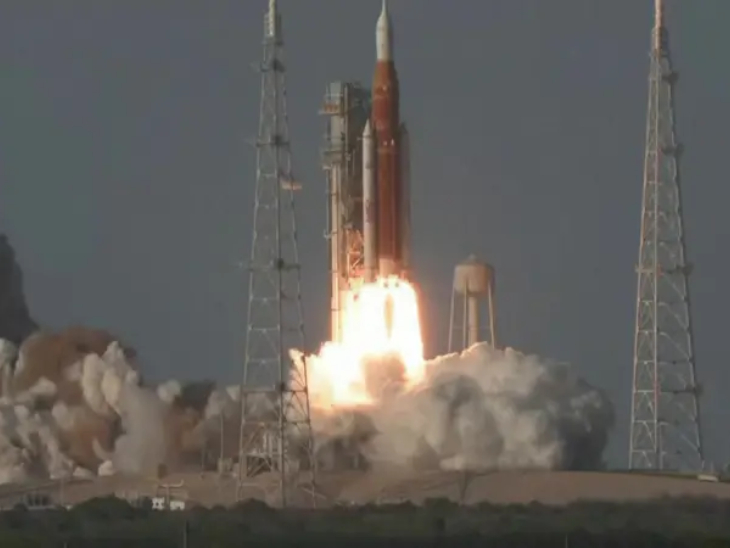
At 4:05 am, the ‘Space Launch System’ (SLS) took off towards the Moon carrying 4 astronauts aboard the Orion spacecraft.

People gather to watch the next-generation Moon rocket (SLS) and the Orion crew capsule launch from NASA’s Kennedy Space Center in Titusville, Florida.

As soon as this historical scene unfolded, the crowd present there jumped with joy. The smile of victory and surprise of seeing this wonderful moment was clearly visible on the faces of the people.
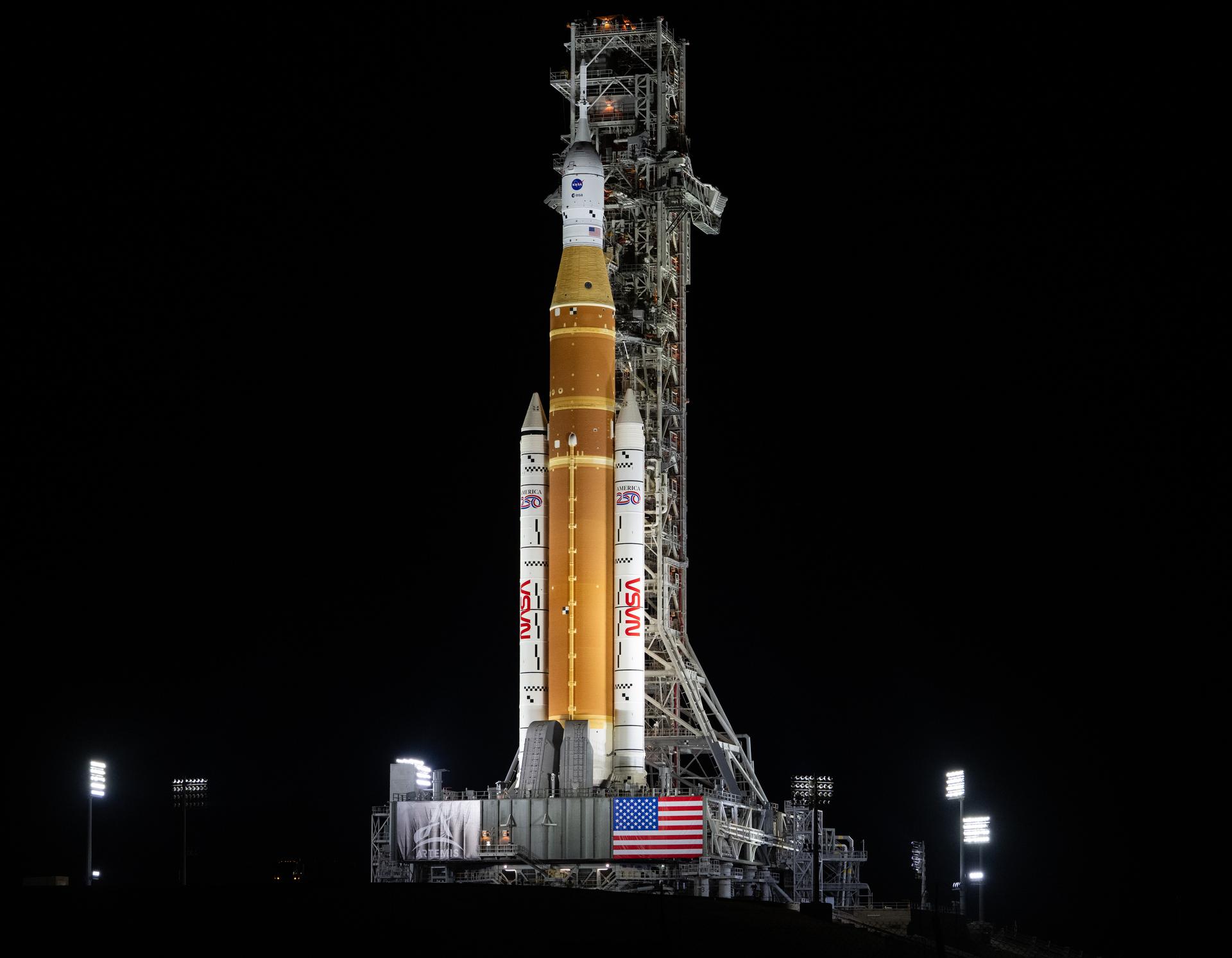
The Space Launch System (SLS) stands on the launch pad at NASA’s Kennedy Space Center before launch.
There was a malfunction in the ‘Launch Abort System’
Just an hour before take-off, some problems occurred in the ‘Launch Abort System’, due to which the launch was in danger. This is the same system through which NASA engineers can safely take out the astronauts in case of any malfunction.
However, engineers resolved this problem quickly. The countdown clock was then stopped at 10 minutes for a safety check. After this, ‘OK’ report came from the engineers who were responsible for different important systems of the rocket.
Finally the crew received a message: “Artemis II, this is Launch Director, you are ready for takeoff.” To this Commander Reed Wiseman responded, “We are going for the sake of all humanity.” Soon after, four RS-25 engines and two solid rocket boosters fired up and the astronauts took off.
Purpose: NASA wants to investigate ‘life support system’
The purpose of the mission is to investigate the ‘life support system’ of the spacecraft. NASA wants to see how safe it is for humans to live in space. The vehicle will not land on the surface of the Moon now, but will make it easier for humans to settle on the Moon in the future.

4 Astronauts: For the first time a woman will reach near the moon
The mission includes three astronauts from NASA and one from the Canadian Space Agency (CSA).
1. Reed Wiseman: Wiseman (50), a former US Navy test pilot, is the mission commander. Wiseman, who spent six months on the space station in 2014, is afraid of heights above the ground. After losing his wife in 2020, Wiseman is raising his two daughters alone.
2. Christina Koch: Engineer and physicist Christina Koch (47) is the mission specialist. She holds the record for the longest stay in space by a woman (328 days). In his childhood, he had decided to become an astronaut after seeing the ‘Earthrise’ photo taken of Apollo-8.
3. Jeremy Hanson: Former Canadian fighter pilot Jeremy Hanson (50) is a mission specialist. If everything goes according to plan, Hanson will become the first non-American to reach the moon through this mission. Hanson took with him Canada’s famous maple syrup and cookies.
4. Victor Glover: Glover (49), selected as the pilot for the mission, will be the first black person to reach close to the moon. Glover has taken with him a Bible and his wedding rings. They say that the true meaning of being human is to discover and learn your place in the universe.
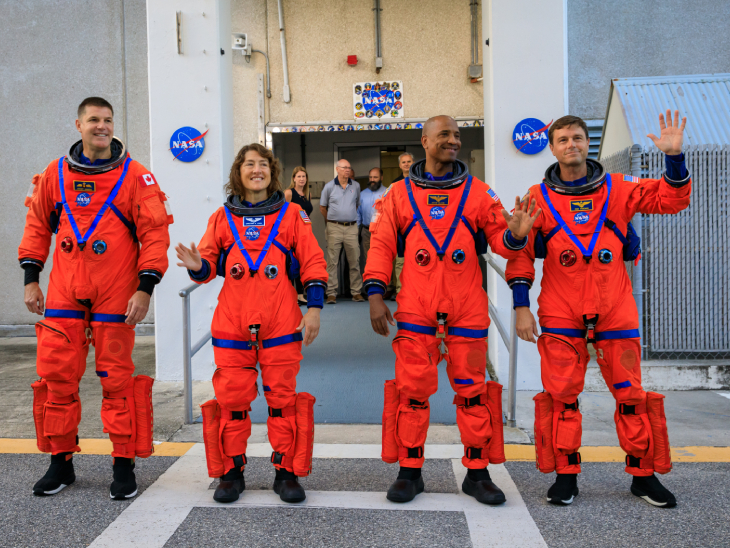
Astronauts (left to right) Jeremy Hanson, Christina Koch, Victor Glover and Reed Wiseman heading to the launch pad; Photo taken during launch day rehearsals at Kennedy Space Center.
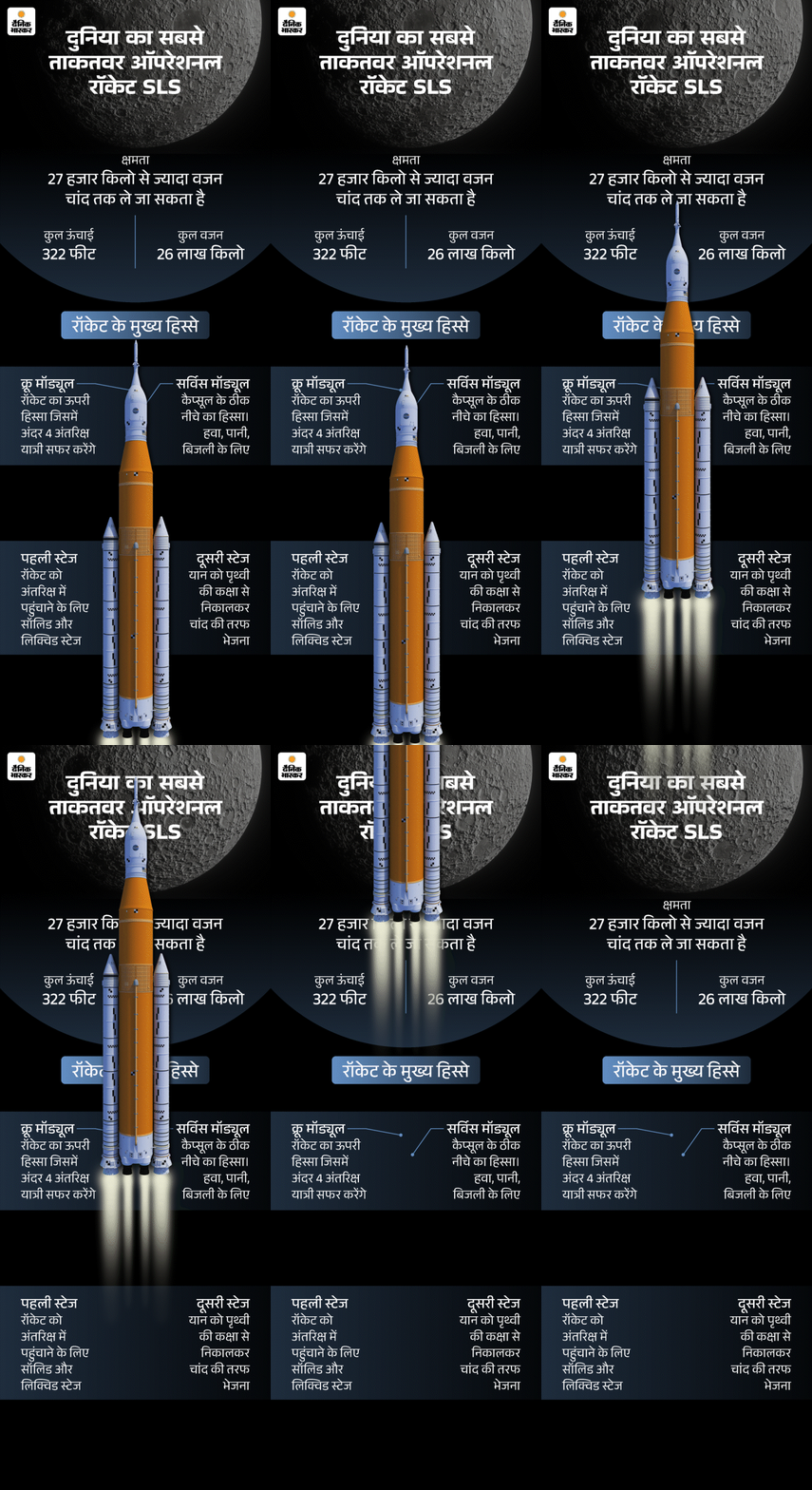
Next step: Preparing to land on the lunar surface
After Artemis-II, NASA will work on ‘Artemis-III’ mission. The docking system will be tested in it. If everything goes well, then in the year 2028, humans will once again set foot on the moon through Artemis-IV. Earlier in 2022, unmanned Artemis-1 was sent.
Big difference between Apollo and Artemis programs
The main objective of the Apollo mission in the 70s was to prove itself superior in the ongoing ‘space race’ with the Soviet Union. But the Artemis program is entirely a preparation for the future.
This time NASA wants to build a permanent base on the moon, so that humans can learn to work by living there. This experience will help in fulfilling the dream of going to Mars in future.
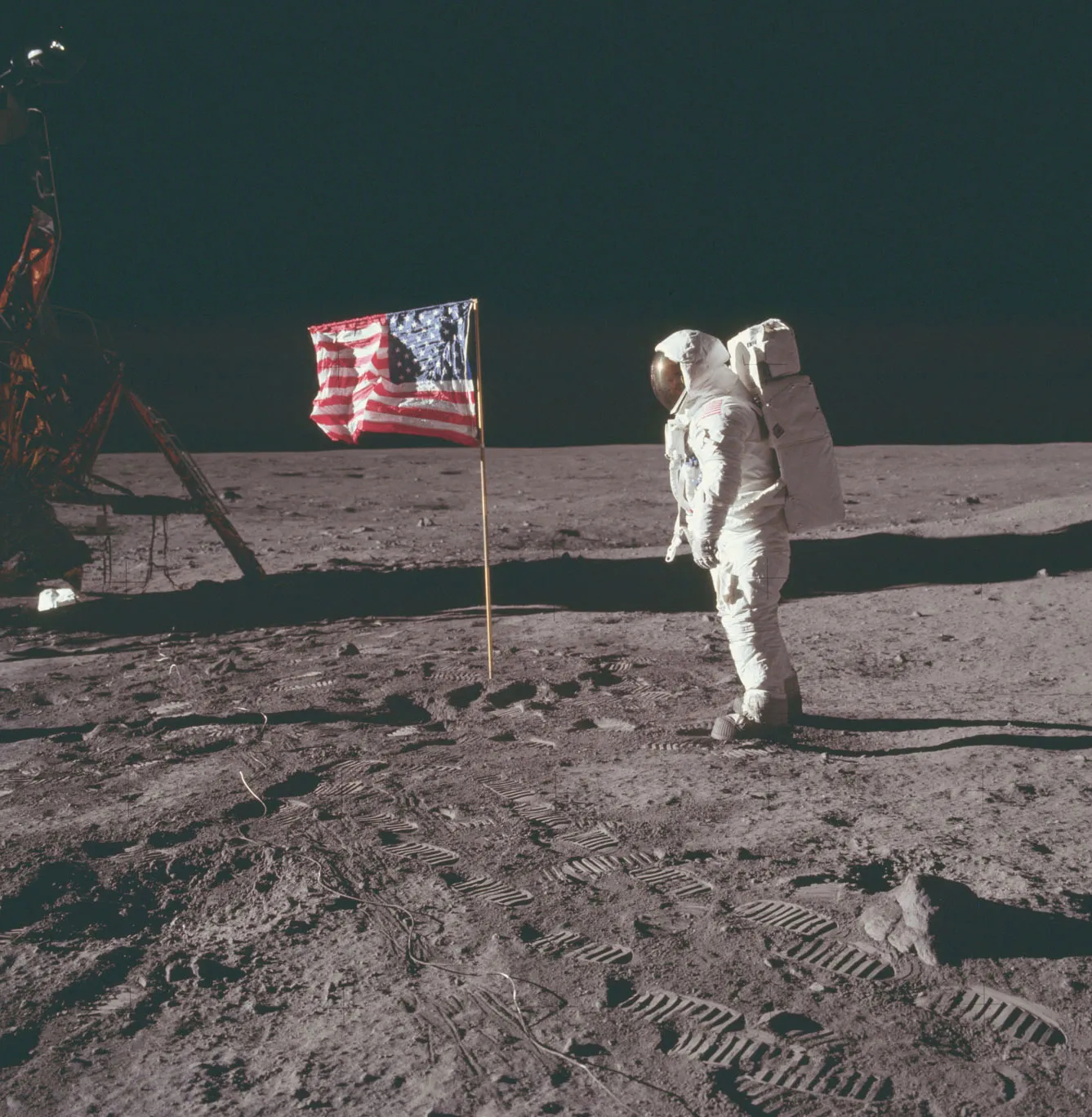
Astronaut Buzz Aldrin standing near the American flag on the surface of the Moon in 1969.
24/7 coverage on YouTube and NASA website
People from all over the world can watch this historic moment sitting at home. NASA is live streaming it on its YouTube channel and ‘NASA+’ platform. After the Orion spacecraft reaches space, live views will also be shared from there.