

A proposal to raise taxes on the wealthiest Californians has sharply divided Democrats in the biggest blue state in the country — and is poised to set up a broader debate for the party heading into the next presidential contest.
Clear battle lines have formed in recent weeks among the sprawling field of Democratic candidates in California’s open governor’s race this year, as well as among potential 2028 White House contenders in the state, over a “billionaire tax” that could appear before voters in the fall.
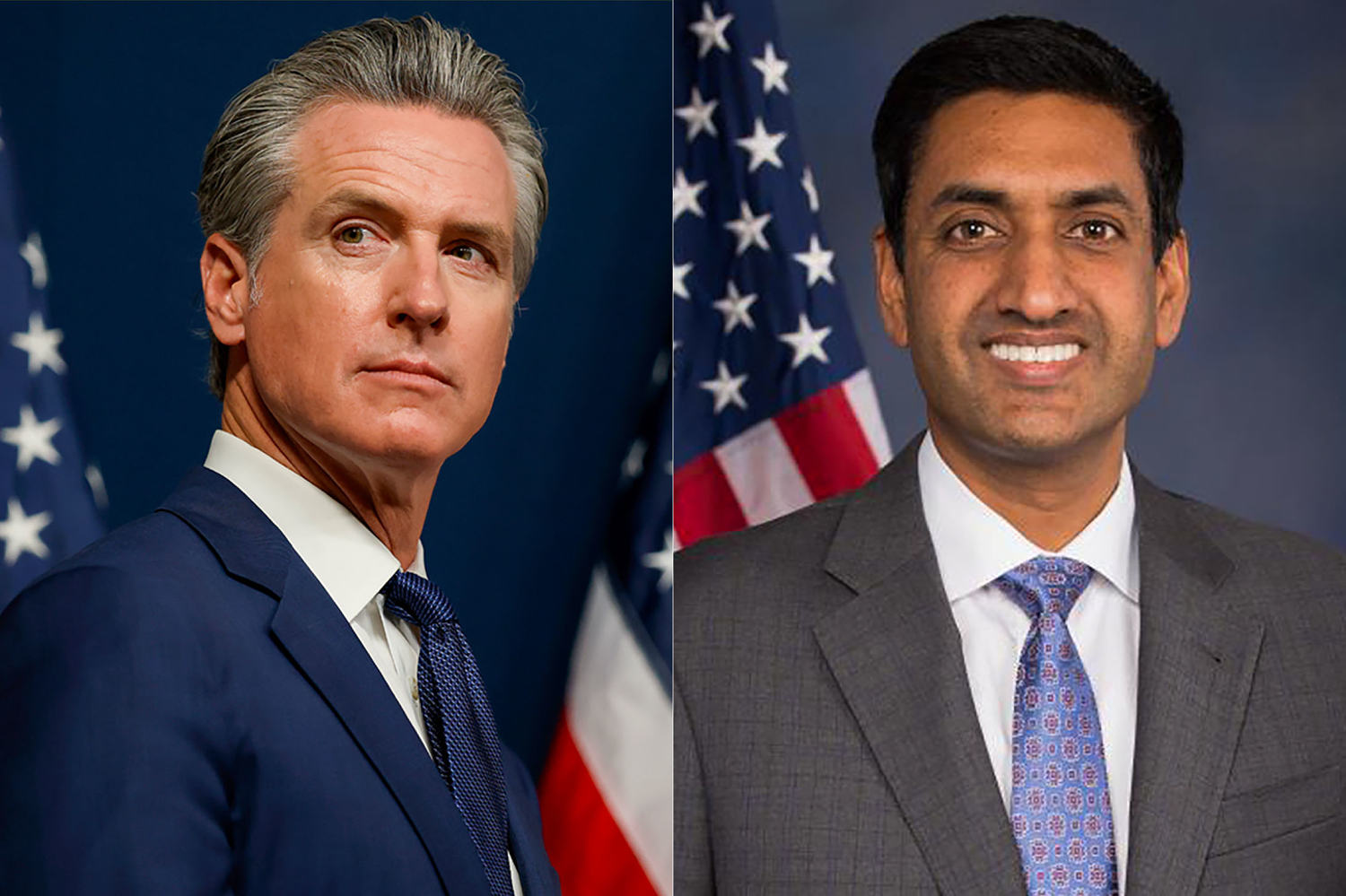
On one side, California Gov. Gavin Newsom, widely seen as a presidential hopeful, has lined up in opposition to the proposed ballot measure. So, too, have a handful of Democrats who are trying to succeed him as governor, including former Rep. Katie Porter, former Los Angeles Mayor Antonio Villaraigosa and former U.S. Health Secretary Xavier Becerra. They’ve argued the initiative would drive wealthy investors and tech leaders from the state.
On the other, Rep. Ro Khanna, who has his eye on a future White House bid, and billionaire gubernatorial candidate Tom Steyer have backed the effort, arguing that it would help close income inequality gaps.
The initiative, if it qualifies for the ballot and is approved by voters, would implement a one-time 5% tax on the assets of Californians whose net worth exceeds $1.1 billion. It would require the state to spend the subsequent revenue almost entirely on health care.
Democrats across the ideological spectrum have broadly attempted to center their economic message around affordability, particularly following the party’s election victories around the country last November.
But the clash in California has shown that filling out the details of that platform in a way that appeases both progressives and centrists remains easier said than done.
“I do think this whole debate is a huge quagmire for the Democratic Party,” both in California and nationally, said Ted Lempert, a former Democratic assemblyman in California who teaches political science at the University of California, Berkeley. “Clearly, it’s about fairness and about ‘the rich need to pay their fair share.’ But the way this one is proposed — it does alienate a lot of folks who do support the Democratic Party and fund the Democratic Party, and you see so many Democrats uneasy with this.”
The battle lines in California
Supporters of the initiative, called the 2026 Billionaire Tax Act, must collect 875,000 signatures by April for the state to certify it by June to appear on the November ballot. In addition to the one-time tax on those worth more than $1.1 billion, it would implement a smaller tax on individuals worth between $1 billion and $1.1 billion. The taxes would apply retroactively to anyone living in the state on Jan. 1, 2026.
The measure would then require California to spend 90% of the new revenue on health care, with the remaining 10% split between education and food assistance programs.
Proponents of the ballot initiative, which was drafted by the Service Employees International Union-Healthcare Workers West, say it’s necessary to help fill in the budget shortfalls that California will face due to cuts to Medicaid that were a part of the “big, beautiful bill” President Donald Trump signed into law.
Critics argue that a massive wealth tax will result in the rapid flight of wealthy individuals from California, which could create even larger budget problems.
Newsom and allied Democrats had thwarted legislation related to wealth taxes, which prompted its supporters to take the ballot measure route.
“It’s really damaging to the state,” Newsom told Politico this month of the ballot effort. “I think it will be defeated, because I think people understand what it does versus what it promotes to do.”
A spokesperson for Newsom declined to comment for this story.
Matt Mahan, the Democratic mayor of San Jose, the Silicon Valley home to more than 6,000 tech companies and many wealthy residents, said in an interview that the measure “will backfire.”
“I don’t think it will work,” said Mahan, who entered the crowded race for governor this week. “My concern with this is for middle class families who will be asked to pay more in taxes if we drive the tech industry out of California.”
Mahan added that California already has “one of, if not the, most progressive tax structures” and that he did “not think it will work” to add to the tax burden for the state’s uber-wealthy.
Opponents of the wealth tax have pointed to reports that Google founders Larry Page and Sergey Brin have already left the state because of the proposal.
Republicans have also blasted the proposal, including David Sacks, the Trump administration’s artificial intelligence and crypto czar, and tech billionaire Peter Thiel, who has already spent millions of dollars on an emergent effort to prevent the measure from reaching the ballot.
Meanwhile, Khanna, a progressive Democrat, has emerged as one of the more prominent supporters of the wealth tax, even though his Silicon Valley district would be disproportionately affected.
“We need a new tech social contract,” Khanna said in an emailed statement to NBC News. “A nation cannot thrive with islands of prosperity and a sea of despair. The income inequality in California is staggering where billionaire wealth has exploded by 158 percent in the last 3 years yet over 2 million Californians will lose healthcare and over 200,000 health care workers will lose their jobs.”
Khanna’s support for the proposed ballot measure has led some wealthy California tech titans to explore funding a primary challenge against him, The New York Times reported this month.
Sen. Bernie Sanders, I-Vt., the former presidential candidate and progressive leader, has also been an outspoken backer of the proposed tax.
Suzanne Jimenez, the chief of staff at SEIU-UHW who is helping to lead the effort, said the measure is necessary because “we needed a real solution that was going to bring in revenue to deal with the collapse of our health care system.” She called the measure an “emergency tax” that would likely only affect “just over 200 billionaires” in California who, she claimed, would “literally make up this money in about six months.”
Supporters have also argued that concerns over wealth flight are exaggerated.
“The migration threat is overblown. This is the same rhetoric that you heard from rich people in New York City when [Zohran] Mamdani won,” said state Rep. Alex Lee, who sponsored prior legislation that would have implemented other wealth taxes in California.
“Right now, the sentiment among the American people and the people of California is that no one has any love for billionaires,” Lee added.
Among the long list of Democrats running for governor, only Steyer has so far publicly said he supports it.
One of his rivals, Porter — a progressive and a former student of Sen. Elizabeth Warren, D-Mass. — said in a statement that she has “real concerns about this specific proposal because it could end up hurting our ability to fund other key priorities like education and food assistance and make it harder to sustainably fund California’s needs,” but added that “no one in this race has fought harder to make the ultrarich pay their fair share.”
According to a December estimate published by California’s Legislative Analyst’s Office and Department of Finance, the state would “collect tens of billions of dollars from the wealth tax” — but a “likely ongoing decrease in state income tax revenues” would also occur that could cost “hundreds of millions of dollars or more per year” if billionaires decide to leave California.
A broader debate
While a wealth tax is likely to be put directly to voters this year only in California, similar skirmishes over the broader issue are playing out in several other states as Democrats chart their path forward ahead of the 2026 and 2028 elections.
In New York, Democratic Gov. Kathy Hochul has walked a fine line as she faces a primary challenger from the left and seeks to form a working partnership with Mamdani, New York City’s new mayor, who is a democratic socialist.
Hochul did not propose raising or creating new taxes in a state budget unveiled this month, but included funding two years of a statewide universal child care program. Such a program had been a key campaign promise by Mamdani, who had proposed a wealth tax to fund it. He’s continued to call for raising taxes on the wealthy.
Washington’s Democratic Gov. Bob Ferguson and other Democratic leaders in the state are advocating for a “millionaire’s tax.” Rhode Island’s Democratic Gov. Dan McKee said he’d supported one in his state, too. And voters in Massachusetts passed a “millionaire’s tax” in 2022.
Democratic strategists said they would be closely watching competitive Senate primaries in states like Texas and Maine to see how the issue would continue to unfold.
While wealth tax proposals have proved ripe for conflict within the party, some operatives argued that Democratic candidates would be wise to focus on a broader message of economic fairness.
“Whether a wealth tax is the right way to do it or not is going to be debated. What’s clear is that the underlying notion that we should level the playing field, make sure the wealthy pay their fair share, is as close to a universal position of the Democratic Party as you can get,” said veteran Democratic strategist Jesse Ferguson.