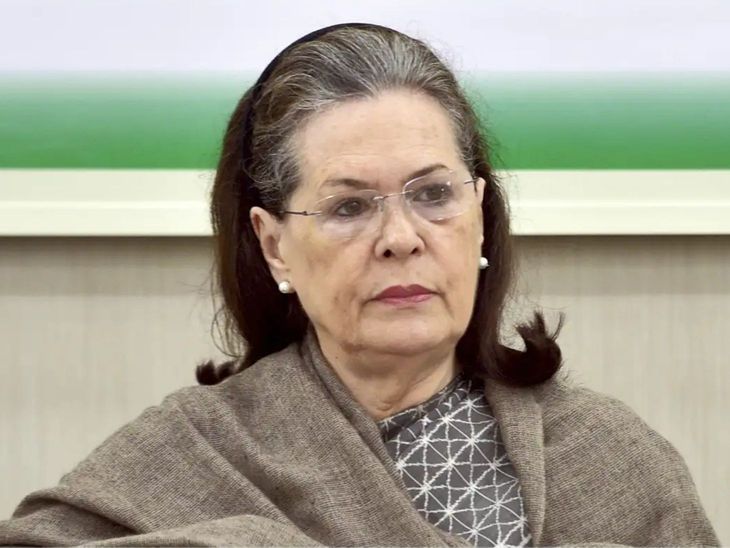
Congress Rajya Sabha MP Sonia Gandhi has raised strong questions about the silence of the Indian government on the death of Iran’s Supreme Leader Khamenei. He said- This silence is not neutrality, but retreat from responsibility. Sonia Gandhi’s editorial has been published in Indian Express today. He wrote- On March 1, Iran confirmed that its Supreme Leader Ayatollah Khamenei was assassinated a day earlier in a targeted attack by America and Israel. The assassination of a sitting head of state in the midst of an ongoing diplomatic discussion is a serious rupture in contemporary international relations. Sonia has written that as shocking as this incident is, what is more shocking is the silence of New Delhi. The Indian government neither condemned the killing nor gave any clear reaction to the violation of Iran’s sovereignty. The Congress MP wrote that Prime Minister Modi, in his initial statement, ignored the major attack by America-Israel and only condemned Iran’s retaliatory action on UAE. He later spoke of ‘deep concern’ and ‘dialogue and diplomacy’, even though the attack took place while the diplomatic process was underway. Big points of Sonia Gandhi’s article… Sonia mentioned the relations between India and Iran. Sonia Gandhi said that the relations between India and Iran are both civilizational and strategic. In 1994, when some countries of the Organization of Islamic Cooperation (OIC) tried to bring a resolution against India on the Kashmir issue in the United Nations Human Rights Commission, Tehran played an important role in stopping it. This prevented the internationalization of the Kashmir issue. He also said Iran made possible India’s diplomatic presence in Zahedan near the Pakistan border, which is important as a counterweight to the Gwadar port and the China-Pakistan Economic Corridor. In April 2001, the then Prime Minister Atal Bihari Vajpayee demonstrated the depth of India-Iran relations during his visit to Tehran. Sonia’s question of Israel-India relations and credibility: Sonia wrote that in recent years, India-Israel relations have increased in the fields of defence, agriculture and technology. India has relations with both Tehran and Tel Aviv, so it can appeal for restraint. But this is possible only if its credibility remains intact and it adopts a principle-based stance. Sonia Gandhi said that about one crore Indians live and work in Gulf countries. In crises like Gulf War, Yemen, Iraq and Syria, India was able to protect its citizens because it was considered an independent and impartial country and not a representative of any power. He said that after independence, India’s foreign policy was based on non-alignment which was not passive neutrality but strategic autonomy. The current situation indicates a weakening of that stance. If India does not speak clearly on the disregard for sovereignty in the Iran case, how will smaller countries trust it in the future? Sonia demands debate in Parliament Sonia Gandhi said that in the next meeting of Parliament, there should be an open debate on the issue of target killing of Iran’s Supreme Leader Ayatollah Ali Khamenei, the Indian Government’s silence on it and the weakening of the principles of international law and sovereignty due to this. The destruction of international norms and increasing instability in West Asia are linked to India’s strategic and moral interests. He said that India has long been talking about ‘Vasudhaiva Kutumbakam’, which is not just a formal slogan but a commitment to justice, restraint and dialogue. At a time when the rules-based system is under pressure, remaining silent is an abdication of responsibility.
Source link
Sonia Bolin: Surprised by Delhi’s silence on Khamenei’s murder: This is not neutral, it is shirking responsibility; The attack took place while the diplomatic process was underway
 By ayoobkk2022