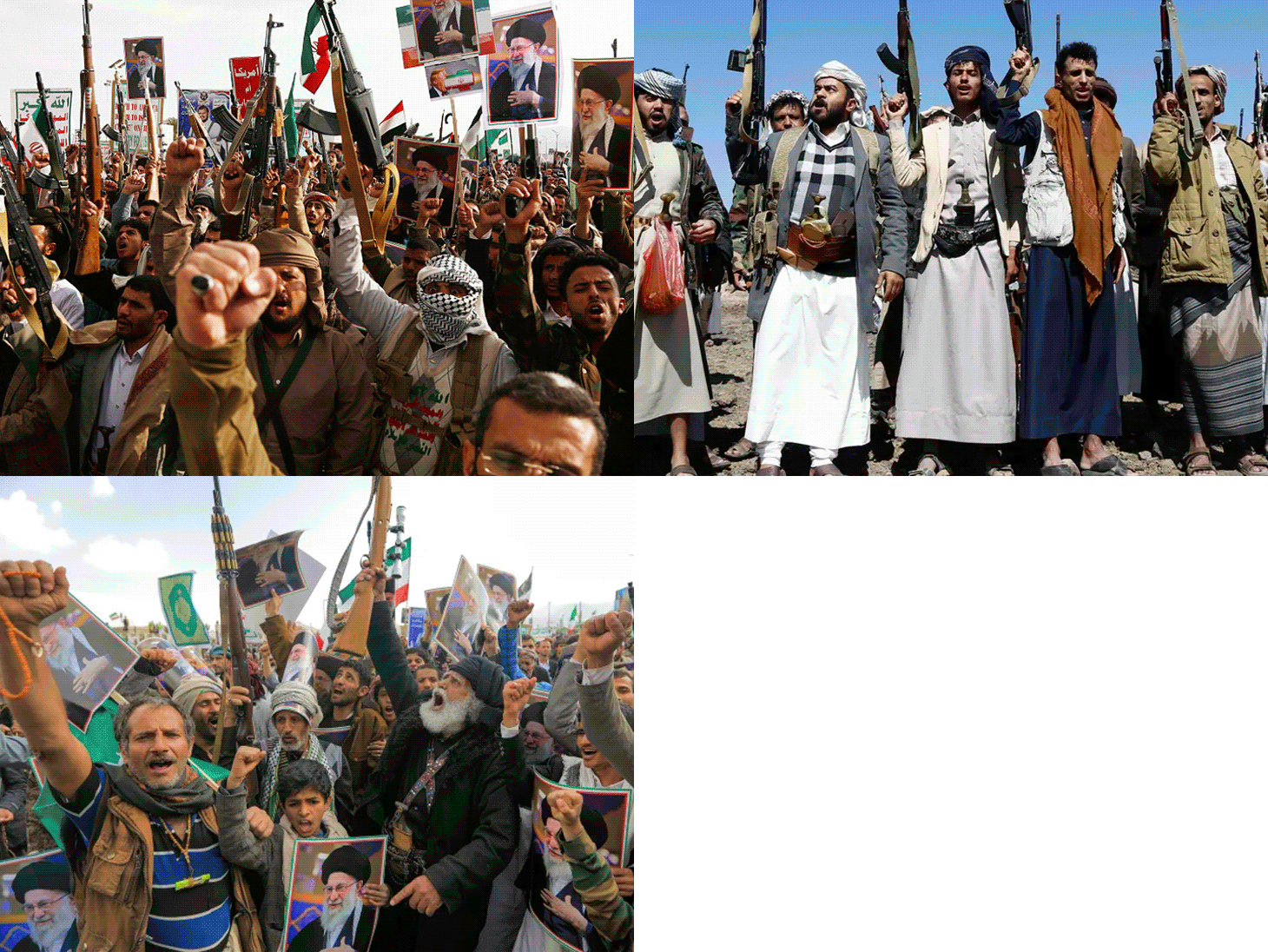
Tension has spread throughout the Middle East after Israel and America’s attack on Iran. A total of 12 countries of the Middle East like Iran, Israel, Saudi, Lebanon, UAE have participated in this war. However, even after 9 days of war, Yemen is still far from it. Houthi rebels live in Yemen who are considered allies of Iran. Israel and Houthi rebels have attacked each other several times since the Gaza war started in October 2023. In June last year, there was a 12-day war between Israel and Iran, even then Houthi rebels were involved in this war. However, this time since February 28, when America and Israel started attacks on Iran, till now the Houthi rebels have supported Iran only through statements. However, it is not clear whether they will stay away from this war in future also or not. The aim is to avoid US-Israeli attacks. According to Al Jazeera, experts believe that Houthis will take part in the war. His staying away from it at present may be related to some strategy. Luca Nevola, who monitors Middle East affairs, told Al Jazeera that the biggest priority of the Houthi rebels is to avoid direct retaliation by the US and Israel. In August last year, Israel carried out air strikes in Yemen, in which at least 12 senior members of the Houthi government were killed. These included Prime Minister Ahmed al-Rahawi and Army Chief Mohammed al-Ghumari. This was a huge loss for the Houthi rebels. The conflict with the US and Israel was considered one of their biggest losses. Houthi rebels become alert after Israeli attacks. After this incident and other attacks last year, the Houthi leadership has now become more alert. They fear that if they take a bigger step, there could be heavy air strikes on the areas under their control. According to Nevola, Houthi rebels also fear Israel’s intelligence capabilities and fear that their top leadership could be targeted. However, despite last year’s losses, the Houthi rebels have not been completely weakened and they still have the ability to attack their opponents. According to Nevola, the Houthis could intensify attacks again if the US or Israel directly attacks them or if their opposition groups in Yemen resume military operations against them. Houthi rebels said – Houthi leader Abdul Malik al-Huti said this week that Yemen stands firmly with Iran and its people. He said that his soldiers are ready for war and military action can be initiated at any time depending on the situation. Yemeni political analyst Sadam al-Huraibi says the Houthis could join the war if Iran asks them for help. According to him, Tehran does not want to use all its options simultaneously and wants to preserve the Houthi rebels as an important force for the future. Al-Huraibi said that if the US and Israeli attacks do not stop, the Houthis will not remain silent for long. According to him, preparations for war are going on in Sanaa and other areas under the control of Houthi rebels. Houthi rebels have the potential to reignite unrest in the Red Sea. They can also attack Israel through drones and missiles. Al-Huraibi says this is almost certain to happen, it will just depend on the timing of the Houthi rebels and Iran. Houthi rebels have the capability to attack multiple targets with missiles and drones. According to Nevola, if the war continues for a long time and the Houthi rebels feel directly threatened, they can expand the scope of their attacks to also target Israel, US warships, US military bases in the region and Israel’s allies such as UAE and Somaliland. Houthi rebels can attack ships: From the end of 2023 to 2025, Houthi rebels continuously attacked ships passing through the Red Sea. At least 9 sailors died and four ships were sunk in this campaign. This had a major impact on the trade of the Red Sea, through which goods worth about one trillion dollars passed every year. Many political and military leaders of Iran have also been killed in the recent attacks by America and Israel. If the Iranian regime weakens or falls, Yemen’s Houthi rebels could be the biggest loser. According to al-Huraibi, if Iran weakens, the smuggling of Iranian weapons to Yemen could be reduced or stopped altogether. This will be a big challenge for the Houthi rebels. The United Nations said in 2022 that thousands of weapons seized in the Arabian Sea were probably shipped from a single port in Iran. The report of an expert committee of the United Nations Security Council also said that weapons made in Russia, China and Iran were smuggled into Yemen through boats and land. However, Iran has continuously denied these allegations. Who are the Houthi rebels? Civil war started in Yemen in 2014. Its root is the Shia-Sunni dispute. The two communities have been at loggerheads since the beginning of the Arab Spring in 2011, which escalated into civil war, the Carnegie Middle East Center reports. In 2014, Shia rebels opened a front against the Sunni government. This government was led by President Abdrabbhu Mansour Hadi. Hadi seized power in February 2012 from former President Ali Abdullah Saleh, who had been in power for a long time after the Arab Spring. Hadi was struggling to bring stability to the country amid change. At the same time, the army split and the separatist Houthis mobilized in the south. In the race for dominance in Arab countries, Iran and Saudi Arabia also jumped into this civil war. On one hand, Houthi rebels got support from Shia dominated country Iran. So the government of the Sunni majority country Saudi Arabia. Within no time, the rebels known as Houthi captured a large part of the country. In 2015, the situation had become such that the rebels had forced the entire government into exile.
Source link
Why are Houthi rebels not helping Iran: Even after 9 days, Shia fighters are away from the war, giving only statements in support
 By ayoobkk2022