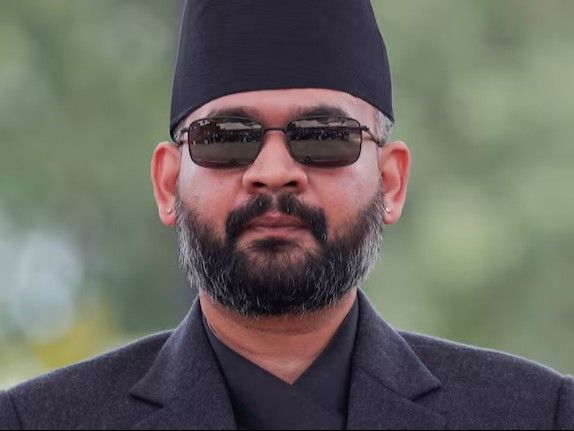
The biggest action ever against corruption has started in Nepal. Prime Minister Balen Shah’s government has formed a 5-member judicial panel, which will investigate the assets of people holding public positions from 2006 to 2025-26. All 7 Prime Ministers after 2005-06 have also been included in the scope of this investigation. These include Girija Prasad Koirala, Pushp Kamal Dahal, Madhav Kumar Nepal, Jhalnath Khanal, Baburam Bhattarai, KP Sharma Oli and Sher Bahadur Deuba. Along with this, heads of two interim governments, Khilraj Regmi and Sushila Karki, will also come under the ambit of investigation. Former king Gyanendra Shah will also attend it. Apart from this, three Presidents Ram Baran Yadav, Vidya Devi Bhandari and current President Ramchandra Paudel will also be under investigation. This investigation is not limited to just big leaders, but it will also include ministers, more than 100 people holding constitutional posts and senior bureaucrats. The property of the dead leaders will also be investigated. This investigation will cover the entire period after the end of monarchy in Nepal. This means that almost the entire political leadership after 2006 has now come under scrutiny. The special thing is that this investigation can also reach the Shah government’s own political circles. According to Ports, current Speaker Dol Prasad Aryal, ministers Birajbhakt Shrestha and Shishir Khanal, and his own party Rashtriya Swatantra Party chief Ravi Lamichhane may also come under the scanner as they have held public positions in the past. The special thing is that this investigation will also reach those leaders who are no longer alive. In such a situation, the assets of his family and political heirs can also be investigated. This may include families of leaders like Girija Prasad Koirala and Sushil Koirala. After the mass movement of 2006, democratic system started in the country. Since then, allegations of corruption and illegal wealth have been continuously coming to the fore. Their investigation was often limited in scope or limited to political opponents. But this time the government, the opposition, the former king and the current system are all involved together. There have been consecutive coalition governments in Nepal. No one had a mandate strong enough to launch a large-scale investigation. This time Balen Shah has a huge majority. Retired Supreme Court judge will chair the commission. This 5-member commission is being chaired by retired Supreme Court judge Rajendra Kumar Bhandari. The panel was formed a few weeks after the March 5 elections, in which Shah’s party won a landslide victory. This victory was achieved after the anti-corruption movement of youth held last year. The government says that the investigation will be conducted in a fair manner based on complete evidence and law. It is believed that this decision will increase the stir in Nepal’s politics and there may be big revelations in the coming time. Before coming to power, Balen Shah had promised the public that he would eradicate corruption from Nepal and action would be taken against guilty officials and ministers. On March 27, the Cabinet had decided to create such a mechanism within 15 days, which has now been completed. How will the commission of inquiry work in Nepal? The job of the 5-member judicial panel constituted by the Nepal government will not only be to look into the allegations but also to prove the validity of the property. 1. Asset data will be collected. The asset declaration (property details) given earlier by all the leaders, ministers, officials will be made the basis. Data will be taken from the Election Commission, Tax Department and government records. Information about bank accounts, land, stake in companies, assets abroad will also be collected. 2. Cross-verification commission will see how much the assets have increased compared to the declared income (salary, business, inheritance). If more assets are found than the income, then it can be considered as illegal assets like shell companies, benami assets. And property purchased in the name of relatives will also be included in the investigation. 3. Powers of summons and interrogation. The panel can be given court-like powers. Any person can be summoned by sending summons. Can be forced to produce documents, answer and testify. Major corruption cases of Nepal Bhutanese Refugee Scam (2023): In this case, it is alleged that some politicians, officials and middlemen together ran a racket. Under this racket, common citizens of Nepal were falsely shown as Bhutanese refugees, so that they could be settled in countries like America. In this, up to Rs 50 lakh were collected from people. Even former Home Minister Balkrishna Khan’s name had come up in this case. Lalita Niwas Land Scam (2021): Government and state land in Baluwatar area of Kathmandu was transferred to the names of private people through fake documents. In this case, allegations were made against many leaders and bureaucrats including former Prime Minister Madhav Kumar Nepal and Baburam Bhattarai. Wide Body Aircraft Deal Scam (2018): Irregularities worth billions of rupees were alleged in the purchase of Airbus aircraft by Nepal Airlines. In this, questions were raised on the role of officials of the then Ministry of Tourism and Civil Aviation and the airlines management. Earthquake relief scam (2015): Allegations of irregularities in the distribution of funds and materials meant for relief and rehabilitation following the devastating 2015 earthquake. Allegations of misuse of aid surfaced on local administration and political networks. Telecom/Telecom license scam (2009): Allegations of ignoring rules and bribery in issuing telecom licenses. In this, collusion between high level government officials and private companies came to light.
Source link
The biggest investigation against corruption begins in Nepal: 7 former PMs, 3 Presidents, King’s property investigated, 100 ministerial officers also under the ambit.
 By ayoobkk2022